If you follow me closely, you know that I’ve been discussing romance scams (also known as “catfishing”) for several years now. In short, a romance scam is where criminals will harvest photos from social media and dating site profiles and then use these photos to set up fake profiles on these same sites to enter into online relationships with individuals for the purpose of defrauding victims out of money. A more technical definition of the term romance scam is provided below.
A romance scam is a confidence trick involving feigned romantic intentions towards a victim, gaining their affection, and then using that goodwill to commit fraud. Fraudulent acts may involve access to the victims’ money, bank accounts,credit cards, passports, e-mail accounts, or national identification numbers or by getting the victims to commit financial fraud on their behalf. (Wikipedia)
For at least eight years, scammers have been using my photos, and the photos of my family, to commit these crimes. I hear from new victims on a daily basis as they frequently find the “real” me through my previous writings on the topic. Unfortunately, many victims find out too late, often after they have already sent significant amounts of money to these scammers and/or have developed a significant emotional attachment. These are deeply complex crimes that rely on a victim’s capacity for love, trust, and good will for the execution of fraud.
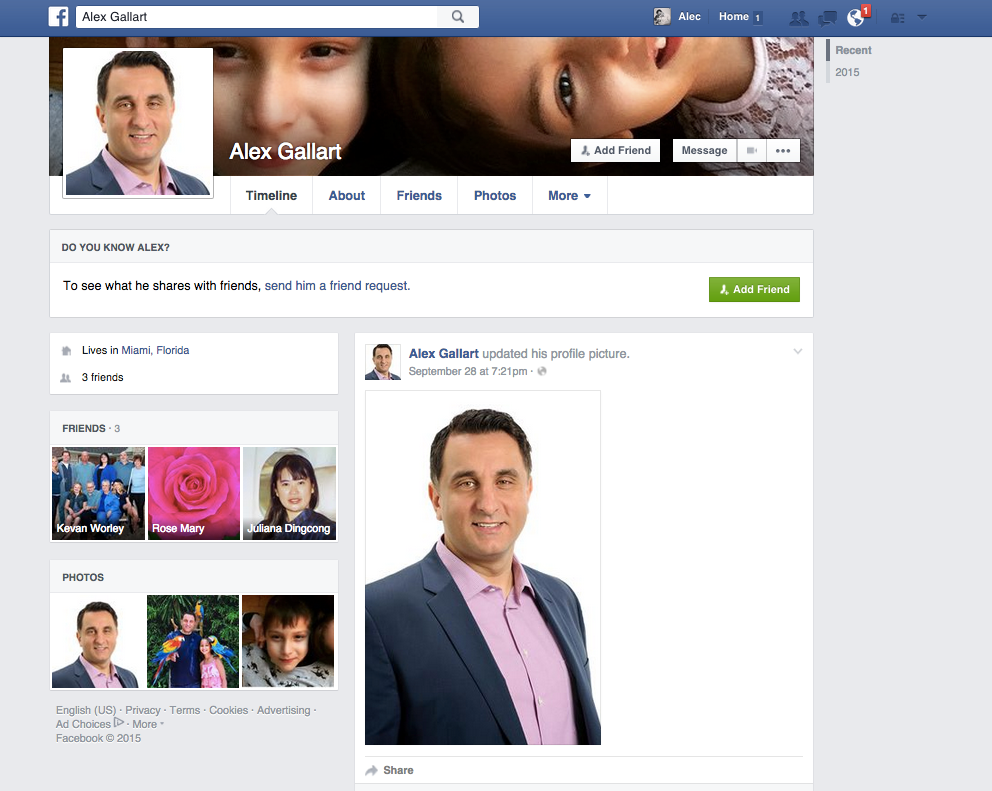
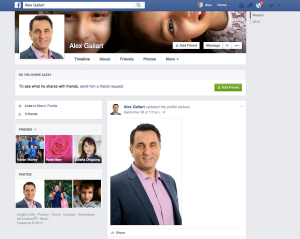
Today, I read a victim’s report on a Facebook group that is dedicated to raising awareness of these scammers. The post is worth the read in itself as it highlights some of the tactics used in these cases. Relevant in this case is that the victim pointed to several social media profiles that were created with my photos and the photos of my family. I’ve included screenshots of these fake profiles below with some added context.
First, there is the fake profile using my photos and the name Alex Gallart. The use of a similar first name is notable as past victims have told me that once they found my real identity they would approach the scammers with evidence of me actually being “Alec Couros”. In turn, the scammers would simply say that they use slightly different names or surnames for whatever purpose (e.g., mother’s name, professional name, etc.). In many cases, this additional lie seems to be taken up as plausible.
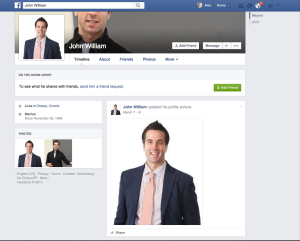
Then there’s photos of my real brother George whose fake name is John Williams in this case. Scammers will set up networks of fake profiles and communicate to victims from each of these to validate the key profile’s identity.
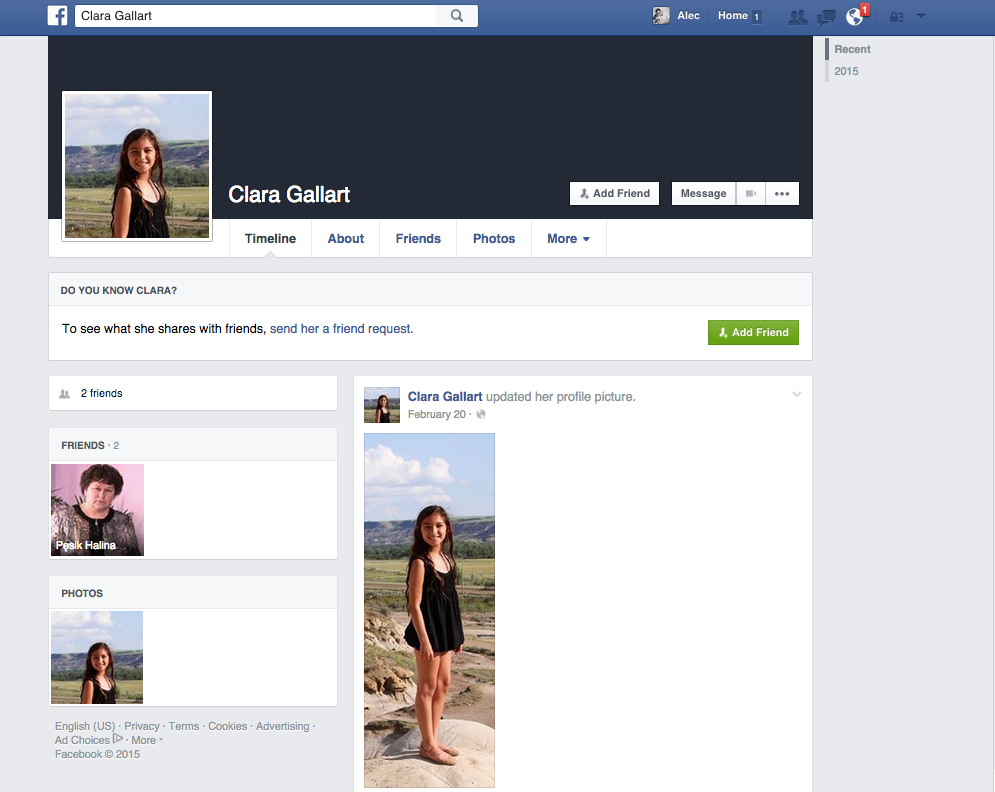
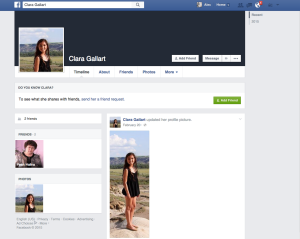
Then, why not throw in photos of my real daughter as well? In this case, the scammers use the fake name of Clara Gallant to set up yet another profile. Alec Gallart seems to be more authentic with each additional connection.
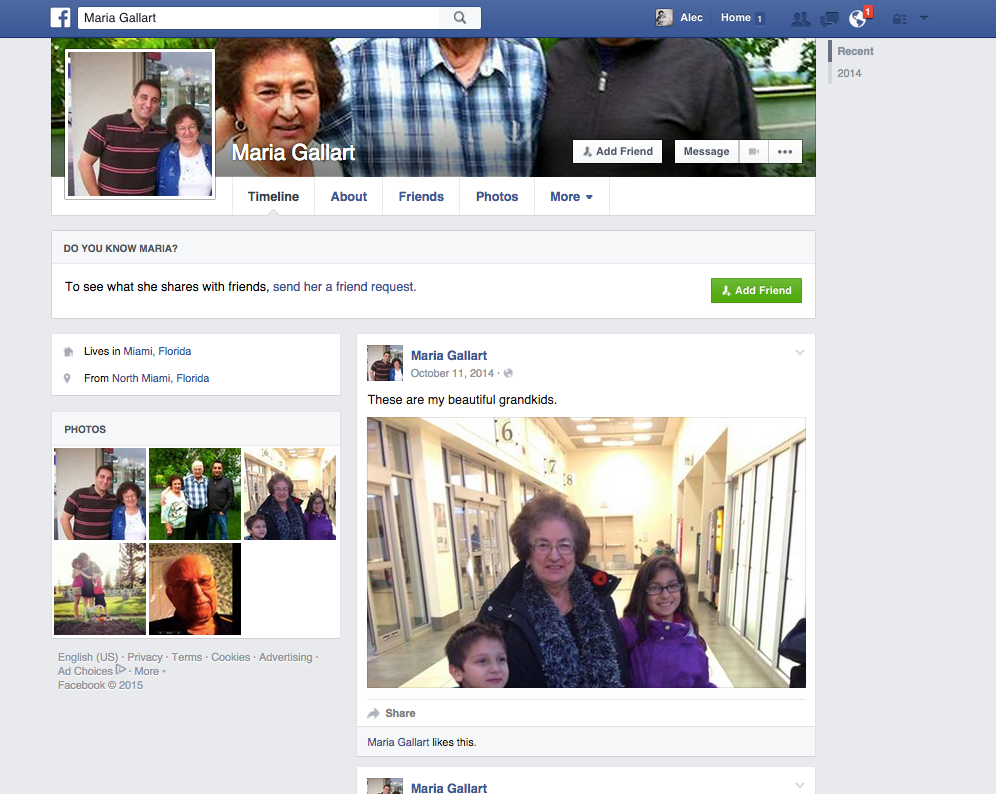
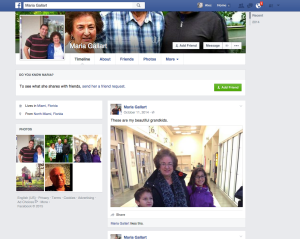
Wait. Not real enough for you? How about we add photos of my real mother in yet another fake profile. As we know, grandmas will never lie to you.
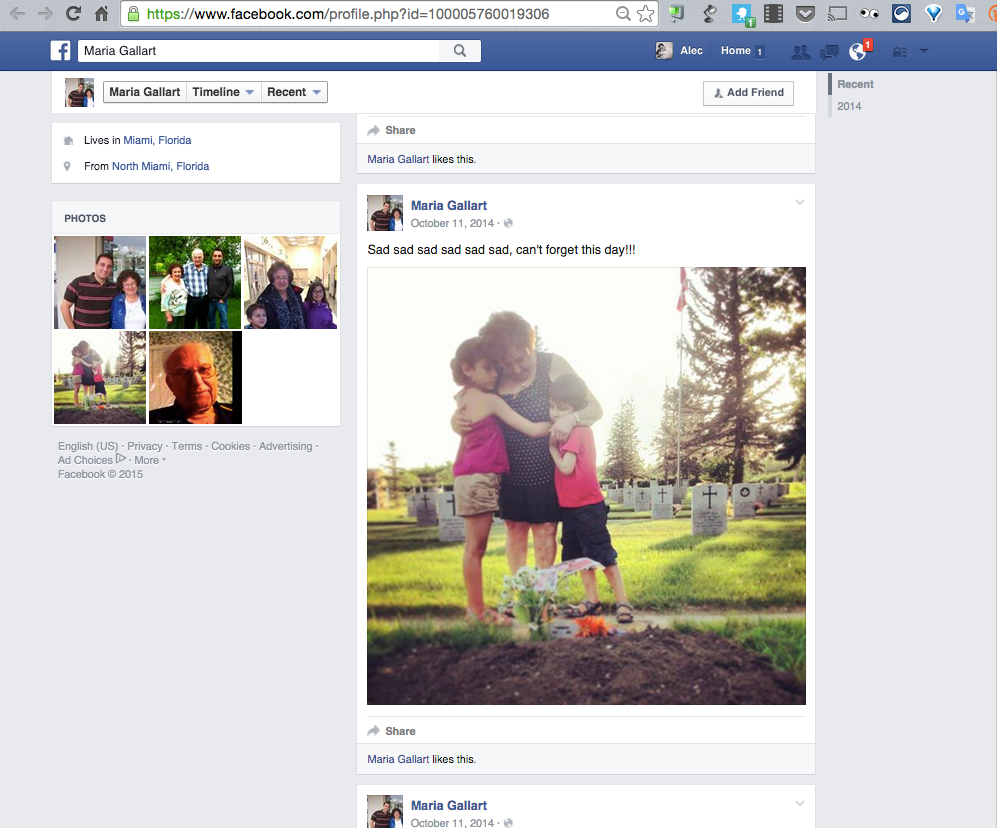
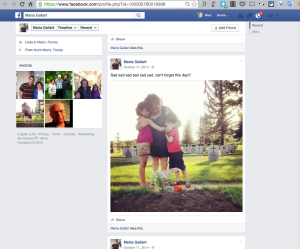
But I guess that wasn’t enough. A family’s set of fake profiles is pretty convincing, but the scammers felt that they needed to go the extra mile to make Alec Gallart even more convincing. The scamers thought it would be great to exploit my father’s death (he passed away in 2013) by including this photo of my children at his burial mound.
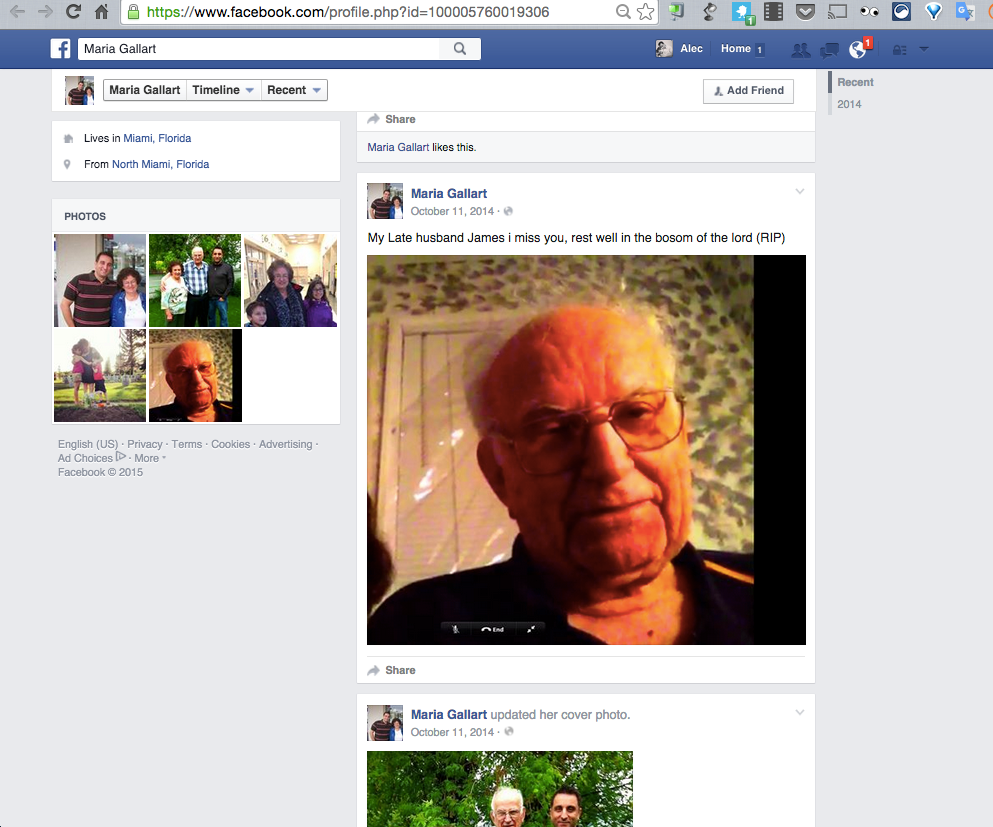
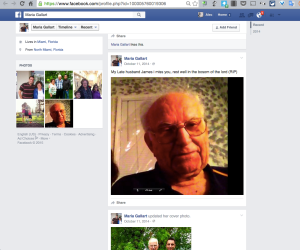
And they also included this photo of my mother remembering my father’s death via Facebook.
So there you go. The more complex the social network becomes, the more convincing the scam will be.
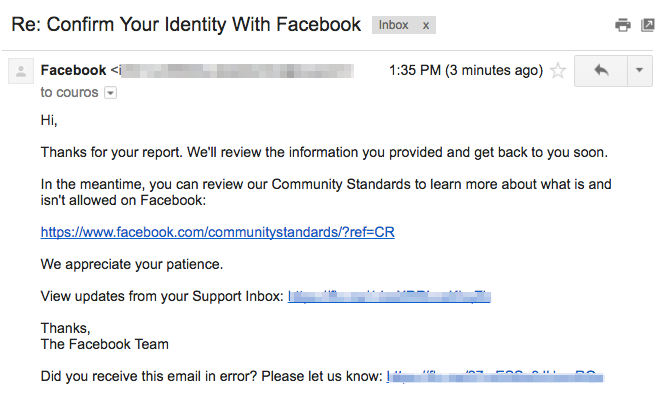
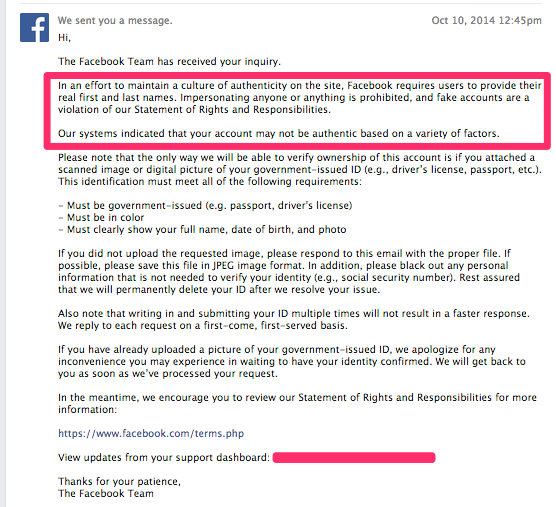
So, this is where I need your help. This happens to me every single day. But it’s not just happening to me. It’s also happening to thousands of others on a daily basis. But, Facebook and other social networks just simply do not acknowledge that this problem exists. For instance, there is no specific way to report these accounts as romance scammers in Facebook’s reporting tool. In fact, as you can see by my friend Alan’s experience, these fake accounts will often be deemed as following Facebook’s community standards!
Back in August, Facebook announced 1 billion daily users. I am sure that number pleases their investor’s but I wonder how valid that claim is considering I’ve personally reported many hundreds of fake accounts and there are logically thousands more that I do not know of. Multiply my reality by the thousands of other people’s profile photos that are being used and I begin to feel that Facebook is intentionally not addressing this reality due to their significance.
But even if these accounts don’t really put a dint into the one billion user reality, there are serious implications here for the identities and well being of their current and future users. A social media site needs to feel safe if one is to connect, share, and communicate with other users, especially with those that we do not know so well. Facebook needs to do something about this problem, but I am convinced that they won’t act unless there is some heat on this issue.
So please, share this post widely. I want Facebook to acknowledge this problem. But more so, I want this issue to get to someone at Facebook that can help address this problem through the revamp of their reporting service and through a number of possible mechanisms to detect the scammers before they can hurt people. I’ve got ideas on how this can be done, but I need to be connected to someone who can address these changes.
If you want to know more about these romance scams, I’ve written several other posts and created several Youtube screencasts. See below. And, thanks for any help you can provide.
The Real Alec Couros